XGen Connected Response gives nurses, clinical staff, and front-desk teams a discreet way to summon help at nurse stations, emergency departments, and reception, without alarming patients. It triggers a coordinated response, connects to 911 with your facility's verified location, and runs on the same platform that handles everyday paging and patient communication.
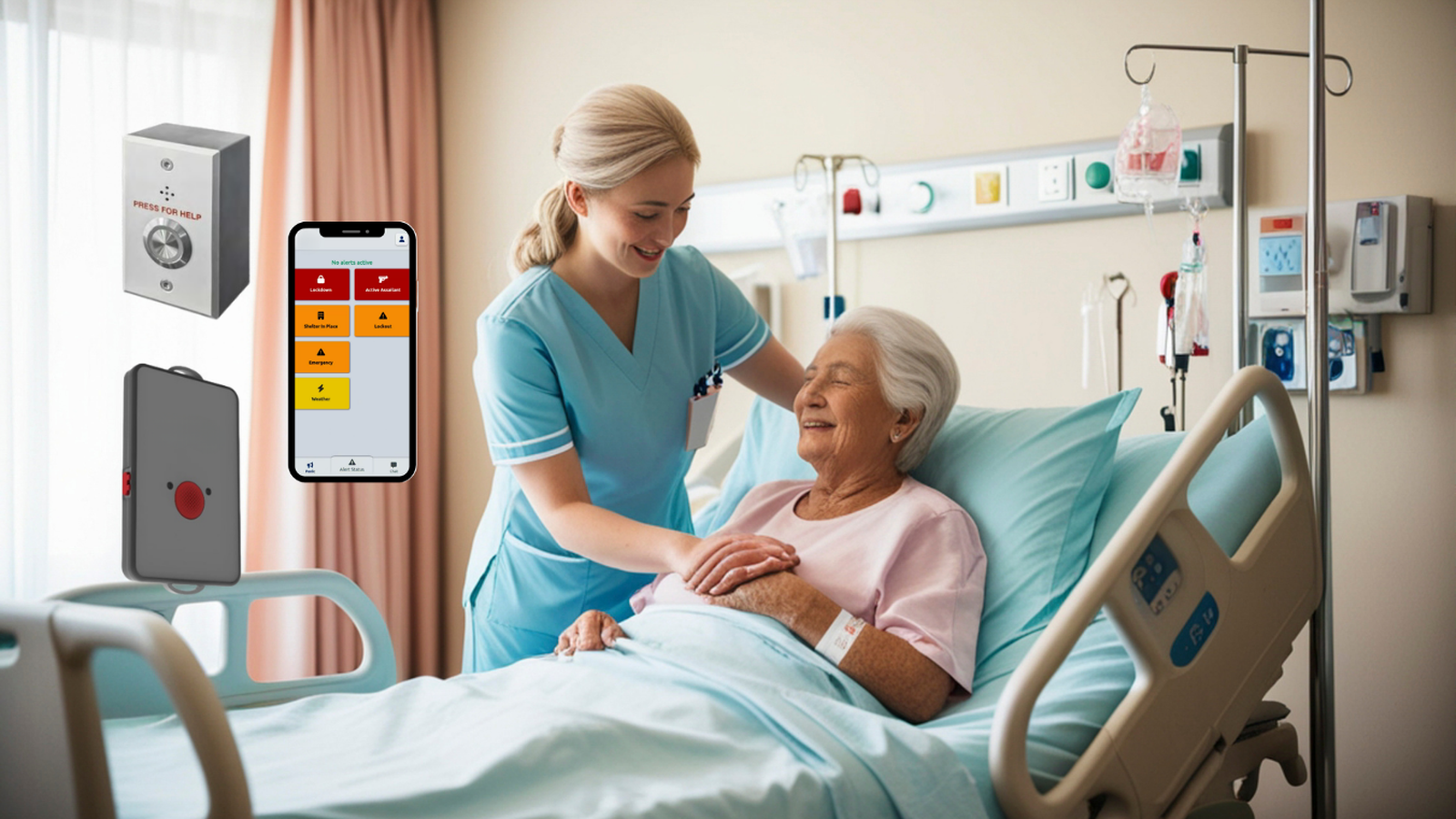
Staff summon help without escalating a situation or alarming patients and families.
The emergency trigger takes several deliberate presses, which helps prevent false alarms.
Alerts reach the right teams and, when needed, the whole facility and first responders.
Dispatch gets the registered facility and area, not just a device's GPS guess.
Emergency departments, reception desks, and patient floors face difficult moments every day, from an escalating visitor to a medical emergency. XGen Connected Response puts a discreet call for help within reach, turns a silent activation into a coordinated response with the exact location, and helps your team stay connected across the whole facility.
A call for help within reach across the facility
Silent alerts that do not alarm patients
Direct routing with your facility's verified location
Start in one department and grow facility-wide
From a wearable staff duress button or a fixed button at a nurse station to a coordinated, location-aware response, with a direct line to 911.
Safety starts at the entrance and continues through the whole building. XGen Connected Response brings visitor management and real-time accountability into the same platform as the alert, so you know who is on site and can account for staff during an evacuation.
Log, screen, and badge visitors at entrances, with sign in and out and instant background screening.
During an evacuation, staff confirm they are safe from any device so leadership sees who is accounted for.
Entry control and accountability tie into the live incident map, so the response and the record stay together.
The alert rides on a full communications system that also runs the day: paging, intercom, and patient communication between rooms and the front desk. It is compatible with most existing systems, so you can start where you need to and upgrade over time.
A clear, practiced chain that turns one discreet press into the right response, in the right place.
A staff member presses a wearable or station button, or uses the app. The emergency trigger takes several deliberate presses so it is never set off by accident.
The right team is alerted, and when needed the facility and 911 are reached with your verified location.
Beacons place the alert on a live responder map, down to the unit and room.
Staff coordinate in real time over push, text, and group chat, with shared awareness of the incident.
Reliable, easy to use, and scalable, so you can start in one department and expand across the facility as needs change.
Designed to fit the unique needs of hospitals, clinics, and medical offices.
Trusted, robust hardware built for demanding, around-the-clock environments.
Intuitive interfaces that require minimal training for busy clinical teams.
Systems that grow with your facility, adding coverage as needs evolve.
A growing number of states require healthcare employers to adopt workplace-violence-prevention programs. Most mandate a prevention plan and hazard controls that commonly include alarm and duress devices, rather than a named "panic button." XGen Connected Response supports these programs. The summary below is current to mid-2026 and provided for general information only, not legal advice.
Cal/OSHA section 3342 (2017). Requires an alarm system or other effective means for staff to summon aid.
SB 240 (2023). Workplace-violence-prevention committee and written plan.
Hospital and nursing-home prevention programs (2025). Assessments, plans, and ED security.
Violence Prevention in Health Care Facilities Act (2008). Plan considering alarm devices.
Health-care prevention law (2019, updated 2025). Plan with alarms as an element.
Health-care prevention law (2011). Safety committee and written plan.
Health-care employee safety (2007, strengthened 2025). Assessment-based program.
Hospital violence prevention, section 144.566. Preparedness and prevention plans.
Health Care Violence Prevention Act (2019). Prevention program on OSHA guidelines.
Healthcare Workplace Safety Act, HB 452 (2024). Hospital security plans and training.
We'll walk through discreet staff duress, facility-wide response, and direct 911, then show visitor management and accountability, mapped to your facility.